Showing posts with label horror. Show all posts

Sunday, March 29, 2015

It Follows (David Robert Mitchell, 2015)

The unceasing sense of dread from the first to the last frame of It Follows, is something that thousands of other horror films reach for, but find beyond their grasp more often than not. Due in no small part to employing a cinematographic language grown from the bones of early John Carpenter, It Follows is successful in creating the kind of movie going experience that leaves the viewer searching the frame from edge to edge for some clue to where the danger will come next. The wide angle and long takes lend themselves well to instilling and developing the sense of dread and anxious suspense that take elements of the films narrative and express it through the kind of visual language that work on the viewers subconscious. The result is that the anxiety, tension, dread and fear that the narrative is trying to build and that the characters are supposed to be feeling is mirrored very directly by the audience.

The STD as the delivery mechanism for horror isn't a completely new invention by any means. Cronenberg's classic, Shivers, along with the very well done and unfortunately under recognized Contracted (currently available to stream on Netflix) use it, but It Follows strays away from the kind of body/biological horror the other films of this variety use and instead heads off into supernatural territory. Shockingly enough, as horrifying as they are in real life, STD's aren't an often used story element in horror or sci-fi, which works in the films favor. Heading away from the science fiction aspects that have been at the center of previous films that have attempted to incorporate STD's, puts even the more seasoned film goer at the disadvantage (or advantage, depending on the particular viewers preference) of not being able to refer to previous incarnations of the idea for frames of reference as to where the story might be going. That alone is an unusual feat and deserves recognition.

The It of It Follows is never fully explained, which is to film maker David Robert Mitchell's credit. The basic conceit at the center of the story being that one character transfers the attentions of the shape shifting It to another through intercourse. It is going to follow until It kills you. It can look like anyone and the only way to get rid of It is to give It to someone else.

This is not a film as concerned with neatly tying up it's story and plot as it is with putting the audience through the experience of It following. The success of the film and it's often unsettling and sometimes genuinely frightening moments are due to that focus. Where most other horror films are obsessed with the origin of the horror, vanquishing it and the story that happens in between those two points, It Follows leaves basically all of those tropes behind. What we're told about the thing stalking Jay, the teenage protagonist, comes from the person who gave it to her and who is very clearly an unreliable source for definitive information. This lack of concrete understanding serves to add another layer to the sense of dread the cinematography creates by putting the audience in the position of knowing no more about what's trying to kill her than she does, but always seeing it coming. The tension derived from that unknown heightens the stakes behind every decision her character makes, because there isn't any absolute. There is no magic incantation, no scientific wizardry, no definitive way for Jay to get free from Its pursuit. There is no solution, and we can see It coming.

When it does take on some of the tropes of so many past horror films, they are dealt with in a way that expresses the reality of this very unreal experience. Engaging to some degree in the "kids have to figure it out on their own and save the day" kind of story that was extremely popular in the eighties, It Follows leaves the territory of the heroic and delves directly into the relationships between the group of teenagers with a remarkable precision. As fantastic and unreal as a supernatural STD is, the relationships between the kids are very real, and very much filled with the kind of uncertainty that is a hallmark of the mid to late teens. In that way, the film is actually more real and more truthful than even most of the mainstream dramas that attempt to delve into the world of being a teenager.

As easy as it would be to read the film as the kind of puritanical trash so many other horror films trade on and use as currency, there are aspects of it that suggest something much more interesting is happening. There is a very real connection between what Jay experiences and the experiences of victims of rape, sexual assault or anyone who has experienced PTSD. Few films, even the more lauded mainstream "issue" films that attempt to address it, have been as good at conveying the feeling of constant danger, anxiety, and hyper vigilance that are the real power of the results of sexual assault that are most damaging in the long term. Other films may express the injustice and brutality of those experiences, but this film conveys the actual feelings, and it's easy to wonder if the title It Follows is as much about the experience following being assaulted or raped, because it certainly puts the audience more directly into that experience than most films would even begin to consider because most of them lack any real understanding. This isn't something the usual "sex gets you killed" puritanical garbage would ever attempt to portray. Those films lack any empathy for the victim. It Follows isn't begging for the audience to feel pity for Jay, it's trying to make them feel what she feels, and it does so damn well. Maika Monroe, who plays Jay, imbues the character with a combination of traits and emotions that makes her very real in this very unreal world, and is able to move fluidly from being a pro active agent for her own well being to being someone who can barely grasp the reality of their situation without ever stumbling into the territory of making that transition seem false, forced or without base. She can convey a kind of watchful distance from the other characters, then also convey an immediate, urgent need for it all to just stop and all of the emotional territory between in a way that makes Jay a very real, very human character that gives the audience the window into that very same experience. None of this seems designed as something Maika Monroe or David Robert Mitchell are making a definitive comment on so much as making them a part of the overall experience.

Time and setting are also really interesting parts of what make the film work. It is timeless, in the sense that the costuming and set design give no real sense of when the film takes place. It's as likely to be present day as it is to be some slightly alternative version of the 80's or 90's. As time is such an important factor in giving people some degree of mooring and context for the understanding and world view of characters and their environment, it just adds to a dream like quality that is at the outer edge of the films atmosphere. The only real indicator of time are some of the locations which fit directly into the rest of the film in that they could be now or thirty years ago, and then a preoccupation with urban decay as an indicator that there was a time before, that time is gone, and the present the film takes place in isn't nearly as prosperous. Being set in and outside Detroit, there's no lack of urban and suburban decay for the characters to wander through, and the sole conversation in the film that the main characters have is much more a description of their relationship to it as children than it is on the decay itself.

In conjunction with that, there are virtually no present adults in the film. Jay's mom is almost entirely absent, except to show that she is absent as a formative influence or means of support for her daughter. With those few exceptions, the perspective we're given on the adults comes from Jay and the few friends who are attempting to either help her or keep her from losing her mind, because they aren't all completely sure that what she is experiencing is actually real. Between the decay and blight of the past being so much a part of the setting and the narrative suggestion that the adults are dealing with their own demons, the time and setting become a part of conveying the sense of helplessness and hopelessness that contribute the sense of anxiety in the film. These teenagers seem doomed to a world that is in a state of constant decay and if they're parents are any indication, their future seems to be a struggle with hopelessness and decay, even without the addition of a supernatural force trying to kill one of them.

David Robert Mitchell doesn't seem to be making any kind of definitive comment about any of these weightier, heavier themes so much as meditating on them in a general way or using them as a way to make the overall impact of the experience of watching the film have more weight and resonance. What is interesting about their inclusion in the film is that they do mimic the way they work in real life. They are peripheral in the film, and in the lives of people who are experiencing them, they often seem peripheral and distant as they're going about the more urgent necessities of their daily lives, but as distant as those larger issues and ideas may seem, they are having an effect on daily life. Most of us are just trying to get through our days, and though we may be aware that our past experiences and our environment have some effect on us, it's not something we're objectively conscious of. They are things that muddle around in the backs of our minds while we're doing what needs to be done to live and survive. In that way, Mitchell has made a film whose emotional exactitude between the urgent necessity of the immediate situation at hand and the way the past and the environment influence it is pretty amazing.

It Follows isn't a standard horror film. Audience going to see it specifically because it's being hailed as "The scariest movie in a decade" are probably going to be disappointed. It's too unusual and too methodical for the majority of modern horror audiences. It's not preoccupied with telling a fairy tale story as much as it is providing a cinematic experience that recreates or instills it's characters emotions in it's audience as effectively as possible. It has much more in common with The Shining than it does with The Haunted, and even though The Shining is now consider a classic, must see of the horror cannon, it's less linear approach will have much less mass appeal. It's interesting, effective film making with more attention to emotional detail than to hitting the requisite plot points and it creates an incredibly effective atmosphere of dread that will be a welcome departure for more discerning film and horror buffs.


Monday, December 08, 2014

The Babadook (Jenifer Kent, 2014)

In many ways, this story has been around for centuries. The basic plot of an item of some kind being a gateway/prison for something evil, parasitic and malignant isn't new. The Renaissance and the dawn of the Age of Reason saw books becoming a primary carrier for these supernatural infections. That some terrible thing might be released by reading a book has been a staple of Western horror since.

The reason these kinds of stories continue to exist is that their basic, simple structure lends itself to retelling from almost any perspective. With a little ingenuity, they can still be something different than the hundreds of other versions that have preceded them. The Babadook is one of the most sharply written and directed versions of this story that has been around for a while.

It's extremely disciplined, cutting storytelling. Beyond it's familiar, simple set up lies something much heavier and carries a heavier impact. It is an encapsulation of the fears of every single parent. There are a few aspects that are probably more specific to single mothers, but any single parent would identify with the horror this film is really laying bare. They are probably fears every parent has, but would only be intensified at the prospect of being a single parent, the kinds of things that will keep people from divorce and in a bad marriage because of the fears of what single parenthood will be. In more ways than not, it's about the fears and emotional life of being a single mother, and it is in that reality that the horror of the whole story really blooms.

Pan's Labyrinthe, The Devil's Backbone, and The Orphanage are all horror films that have an emotionally resonant core. Where they tend to deal with innocence and childhood, The Babadook deals with the loss of innocence that is being a single mother. It is as emotionally charged as the best of the horror films Guillermo Del Toro has either written and directed or produced, but it reaches for those emotions in a very different way. Where those films reached for them through sentimentality, adventure and discovery, The Babadook reaches for them through the very grinding world of the everyday. This films doesn't rely on turning your stomach to be the source of its horror, it relies on grabbing your heart and squeezing it while setting off every possible psychological alarm bell it can. It's creepy, disturbing and pushes some very primal buttons, but not once does it seem forced or as if it's trying to hard.

Essie Davis plays Amelia, mother to Samuel (Noah Wiseman). Essie Davis carries this film in a performance the film it needed in order to succeed. Like the storytelling, it's honest, disciplined, and displays an excellent understanding of the line between being able to reach intense emotions and being over the top. As a team, writer/director Jennifer Kent and lead Essie Davis have created something that is a deeply creepy, disturbing, intense and emotionally charged experience. What she brings to the film gives it everything it needs to work, and Jennifer Kent tells the story in a way that is efficient, but that it still has enough breathing room to feel like it's unrolling in front of you organically.

There is a sense of the extreme and emotionally repulsive that is so well honed that instead of pushing the audience out of the story and into a focus on their own discomfort, it draws them further in. Make no mistake, The Babadook has some gut wrenching scenes that are part of what the more hard core of horror fans are looking for, but none of them come from some kind of graphic physical violence or injury. It has some shocking moments, but the intention is always about more than just being shocking. All of them are coming from a kind of emotional core that makes this film anything but generic, cheap and lazy. On top of that core, it layers a creepy dread, some intensely scary moments and works its themes throughout the story with a deft hand.

The art direction and set direction are underlying components of what add to the films success. The environment is palpable but never steps in becoming a character. It's a thing lurking around the rest of the story, adding to the atmosphere the script creates, and the general tenor of each scene. The book itself is the foremost example. It is both credible as a children's book in it's use of language and its drawings and art, but deeply disturbing at the same time. In many ways, it is the best possible example of the things that make the film successful and give it a unique place in its genre. 

Jennifer Kent and The Babadook deserve to be recognized for something else. There is only the slightest dusting of visual effects. They are so perfectly used and sparingly applied that at absolutely no point do they become part of what gives the film and it's story impact. They heighten the impact when they are used. There are two very different conversations that can happen surrounding visual effects in a film, whether they are digital or practical effects. One is about the quality of the effects and the other is in how they are used. This film brings both of those conversations together by taking the idiom "less is more" to it's furthest logical conclusion. There are effects in the film. What their quality is can't actually be separated from how well they help heighten the sense of dread and creepiness. 

It's the kind of film that will be as effective for cinephiles who are looking for something meaty and smart as it will for someone just looking for a good chiller that will follow them home and give them the creeps when they turn out the lights. It's guaranteed to draw some fire from cultural critics of every possible variety as well, when they get around to finally seeing it. It's certain to be a conversation starter among more analytical audiences. With the exceptions of those who universally dislike horror films, the gorehound sect of the horror community, and anyone who just hates the idea that single parents and single mothers in particular, every other possible audience going to enjoy it. In that lies the films real genius. It never sells out and becomes something that feels generic and impersonal, but it is also able to tell its story in a way that expresses something that is as close to actually being universal as storytelling can get without becoming generic, pandering or manipulatively sentimental. Time will really tell whether or not this is the best horror film of the year, but it deserves to be in the running, and it if the decade between 2010 and 2020 has enough great films in it that The Babadook doesn't make it into that discussion, film goers and horror fans will have been lucky to experience one exceptional decade.

Similar to:
Pan's Labyrinthe 
The Devil's Backbone
The Orphanage
Mama
The Taking of Debra Logan
The Possession
Lovely Molly
The Exorcist

Wednesday, October 30, 2013

The Woman (Lucky Mckee, 2011)

In 2002, Lucky Mckee unleashed May. A concentrated blast of modern social discomfort and disquieted rage at the traditional female roles and portrayals, it's one of the most under rated and under appreciated films of it's generation. We've seen the awkward outcast story done with male protagonists thousands of times, but May takes a unique look at it from a female perspective and has some incredibly interesting things to say, while being a deeply compelling, startlingly intelligent film. Angela Bettis embodies the title character with all of her quirks and ticks in a way that is less about being showy and trying to gain acclaim for her talent than it is about making May human. It's not available for streaming on Netflix currently, but it is available as a streaming rental on Amazon. Click here and go watch it now if you haven't seen it, you won't be disappointed.

Wednesday, June 12, 2013

American Mary (Soska Sisters, 2012)

(Note: This review originally appeared on Truly Disturbing. I haven't had time to go through the normal formatting.)

AMERICAN MARY is an unexpected experience. With it, the Soska sisters are continuing a new generation of film makers attempts to merge the art house and the grind house. Steeped in the visual aesthetic of film noir and the tropes of the long, lurid and wonderful history of grindhouse cinema, AMERICAN MARY’s mind and soul belong to the art house. With Katherine Isabelle as their sharpened scalpel, they go about dissecting the experiences of a talented young woman in a world dominated by men. Don’t be worried though, it’s not a broad, obvious feminist screed. One of the most impressive things about the film is that it uses story, character, atmosphere and imagery in order to avoid turning into a heavy handed approach to these thematic elements. Also, to their credit, the Soska sisters give their main character a degree of complexity that’s often absent from even the best horror films that are inspired from the history of grindhouse. It may or may not have been intentional, but AMERICAN MARY would be perfect when paired with AMERICAN PSYCHO on a double bill.

Saturday, April 06, 2013

Evil Dead (Fede Alvarez, 2013)

The Evil Dead is a seminal classic in the world of horror cinema. It announced the existence of Sam Raimi to the world, became embroiled in controversy due to what was considered graphic content at the time, and initiated at least two generations of horror fanatics into the idea that a horror film could also be joyously creative. If there's one thing that drives the original film, it's the feeling that Sam Raimi was completely intoxicated by the opportunity to try many of the things that had been lurking in the back of his imagination for years, and not just in the way of gore and gross out, but even in the nuts and bolts of cinematography, sound design and so on. It was a feeling of hysterical glee, as if Raimi himself had been trapped in some unseen dimension for centuries and was finally free to pour all of his creative energy into something. It's two sequels became increasingly goofier and were instilled with more and more of Raimi's love of The 3 Stooges, but the first film is a horror film through and through, and some of the sense of danger that it conveyed was due to the audience being completely unsure of where the madmen behind the camera were going to be willing to take them. It served Raimi and the film well that it had a barely perceptible aroma of sleaze about it as well. It's the kind of film, especially at the time, that upon first viewing, truly left all possibilities open. The audience could not be at all sure they were not going to end up seeing anything they would want to "unsee." Luckily, the film hits hardest in that particular way early on and then abandons it for the rest of the film, relying on tension, creative camera work, the charisma of Bruce Campbell and it's over wound energy to deliver all of the things it does.

Monday, April 01, 2013

The Collection (Marcus Dunstan, 2013)

Marcus Dunstan and his writing partner Patrick Melton came to fame on the now defunct reality show, Project Greenlight. It followed the entire production of a film that would be produced by Matt Damon and Ben Affleck, from the choosing of the script all the way through post production. Dunstan and Melton's script for the film, Feast, was picked up in Greenlight's final season, and hilariously documented through it's creation. But, Feast, was without doubt the most successful of the Project Greenlight films (not to mention being a really fun horror/comedy). Dunstan and Melton then got to try their hand at doing some writing for the horror franchise that was the heavyweight champion of the box office at the time with Saw IV. Dunstan and Melton ultimately helped write the final four films in the Saw franchise.

Tuesday, March 19, 2013

The Theatre Bizarre (anthology, 2011)

(Note: This review was originally posted at Truly Disturbing Horror.) 

Do you like Lovecraft inspired horror? How about kinky, body horror? Are you into horror with a slightly more metaphysical aspect to it? What about psychological horror? Maybe the kind of art house horror that goes all out weird and truly mind boggling is more your taste? Are you into gore? What are your feelings about the emotionally disturbing kind of horror that reflects on childhood? How do you feel about creepy Udo Kier?

If you’ve answered postively to more than two or three of those questions, The Theatre Bizarre is for you. If you can’t find one or two segments that you enjoy in this film, you probably hate horror films.

Friday, February 22, 2013

Dark Skies (Scott Stewart, 2013)

The home invasion thriller, the possession film, the haunted house genre, and alien abductions make up the mix of what Dark Skies is attempting to be. Starring Keri Russell, Josh Hamilton, Dakota Goyo, Kadan Rockett, with J.K. Simmons in a supporting role, it centers around a family experiencing strange phenomenon that turns out to be alien activity. All of this is highlighted in the trailer, so it's not giving anything at all away to describe that much here. Scott Stewart, whose previous directing credits include Legion and Priest, has written a script with a much more condensed cast and a much less epic variety of story here.

Walking into the theater and sitting through the film, I had no idea that Scott Stewart was the director. Had I known that, and had I known that his other directing credits were Legion and Priest, I might have been more well prepared for exactly what Dark Skies is. If you've seen those two films or even one of those, it won't come as a shock to you that Dark Skies ends up being supremely silly. There are a few decent ideas, and one or two good jump scares, but overall, it just comes off as laughably silly. As if that point needed to be driven home, in the moments that most definitely should have been more creepy or frightening, most of the audience in my theater was laughing. It wasn't a nervous laughter either.

Tuesday, January 29, 2013

Excision (RIchard Bates Jr, 2012)

It's no surprise that so many horror films feature adolescents and that they are the audience the films are meant for. Unless you're the most fortunate of individuals, the kind who won all of the lotteries of fate, granted the genetic ticket to have grown into someone that matches societies description of physical beauty, a materially comfortable and secure home, a relatively well adjusted family, and the confidence that comes with all of that, chances are adolescence is not going to be an easy, simple time in your life that doesn't involve stress and confusion that you're barely capable of handling.

Horror films are a great outlet for that stress and tension, and many of them are created by people who understand that experience from a very personal standpoint. The best of these kinds of films distill that combination of sheer terror, youthful energy, and the hope that somewhere, somehow the confidence and capability the world seems to value are going to available. In the case of horror films, they usually aren't available to the characters until after some horrible, terrifying experience has threatened their physical safety, their immortal souls or something else your average teenager finds of great value. It's not a mistake that for decades, horror films were based on a lone survivor having watched their entire circle of friends unceremoniously massacred by a maniac wielding a variety of different weapons. It represented both the connection to community that many teenagers experience and fear losing and the degree of competition in that community. As budding adults, teenagers and adolescents are basically new converts to the adult experience. They haven't quite gotten there and don't have the acceptance that an adult does though. As with any other new convert in any other subset or society, they're also the one's who are going to most forcefully enforce group norms as part of the insecure need to feel they belong and deserve their place, and in doing so, they end up creating a hyper competitiveness, which comes out in horror films as the inevitable whittling down of the community or competitors to one lone survivor, who has survived because of some combination of traits they've drawn on either purposely or by chance, that the others lacked.

Excision explores many of those same ideas from a perspective that couldn't be more different from your standard horror film. After seeing it to the end, few people would argue that this isn't a horror film, but it doesn't deal with it's characters or it's content in the way audiences generally expect a horror film with an adolescent as the central character to deal with them. It's instead presenting a view of that experience and the kind of hyper competitiveness that comes with it from the perspective of someone who is more or less experiencing it from the outside and not as a member of a small community of friends.

Thursday, January 24, 2013

Mama (Andrés Muschietti, 2013)

Guillermo Del Toro has reached a place in his career that allows him to not only take on the full plate of projects he's attached to (and he's constantly attached to a large slate of upcoming films, whether they end up being made or not), but by attaching his name to a project as a producer, he can allow young directors their chance at making a full length feature. He's done this previously with The Orphanage, a stylish and spooky fright flick released in 2007 and directed by then novice film maker Juan Antonio Bayona. It was a film that bore a resemblance to Del Toro's The Devil's Backbone, not so much as imitation, but as spiritual kin in that they both drew from a long, rich history of traditional ghost stories and an old time era of horror films. Both films relied on suspense more than shock and imbued their stories with a healthy bit of the kind of tragedy that has been missing from horror films for a few decades.

Now comes Mama, director Andrés Muschietti's first feature. Having only previously directed a short film of the same name, Muschietti is very much an unknown quantity and without the weight of Del Toro's name would never have been able to secure either a budget of the size Mama obviously has (by no means a blockbuster budget, but still definitely of a larger variety than most any director with one short film under his belt would usually be able to secure), and even more importantly, a nationwide distribution deal.

Shocking both the horror community and Hollywood, Mama succeeded in burying the competition in it's opening weekend. Not insignificant among those ranks was Arnold Schwarzenegger's return to the world of action films, Last Stand. There's some question about whether or not that's due to the change in the landscape of cinema since Schwarzenegger's exit from cinema to take up politics or audiences just having lost interest in him, but regardless of all that, Mama was a surprise hit. Also, a mostly positive word of mouth didn't hurt the film in the least, and seeing the director of Pan's Labyrinth and Hellboy at the top of the posters and advertisements certainly doesn't hurt. The question is, did Mama and it's director just settle under a lucky star or is the film good enough to have accomplished all this on it's own?

Tuesday, January 22, 2013

John Dies At The End (Don Coscarelli, 2012)

Don Coscarelli has had a unique career. He came to be a prominent writer/director among horror fans in 1979 following the release of Phantasm. He also went on to direct it's many sequels and is the man who wrote and directed The Beastmaster series, which has it's whole own cult following. In case you aren't familiar, the Phantasm series follows a boy who upon discovering the local mortician is actual a being from another dimension doing rather dastardly things with the bodies, sets out to stop him. After making this discovery, the series of films follow this young man, and his friend Reggie the ice cream man, as they battle the forces from this other dimension that are attempting to take over earth. I understand how that sounds, but at the very least, the original Phantasm is worth seeing because it is mind bogglingly original. It matches some real scares with some deeply funny moments and shockingly surreal imagery.

The Beastmaster is something else altogether. It's also a piece of fantasy fiction, but it's extremely different than Phantasm. Much more along the lines of a sword and sorcery variety of fantasy, it follows a warrior who can communicate with animals on an epic adventure, the third film in the series also involving time travel. It is a joyfully silly, fun adventure film in the best traditions of sword and sorcery films.

Those are the films which put Don Coscarelli safely in the hearts of horror and fantasy film fans the world over. He had fallen off the radar for a number of years though. He didn't release a film between Phantasm IV: Oblivion which was released in 1998 and his next film which was released in 2002. That film, was a howling ball of weird hilarity mixed with a healthy dose of horror genre tropes. Bubba Ho-Tep announced Coscarelli's return in a way that made horror fans and fans of the surreal and absurd sit up and cheer like a pack of wild hyenas that have just broken into a slaughterhouse. Bruce Campbell (of Evil Dead fame) plays a man in a nursing home who may or may not actually be Elvis Presley. That's the easy part of the story. The rest is that there's a mummy roaming around that is killing the inhabitants of the nursing home, and when Elvis/Sebastian figures this out, he enlists the help of John F. Kennedy (played by Ozzy Davis). Yes, you read that right. Don't worry, if you actually see the film, which you should, you'll understand and it will make sense.

Needless to say, Don Coscarelli is making very different movies from 99% of the other film makers alive today, and when he's been gone from the landscape of cinema for ten years, many people notice the absence. To his credit, he's made all of these films, and a few others, with the absolute least amount of money he could possibly have at his disposal and is still creating incredibly fun and entertaining films. He is more consistently willing to take chances and try to be actually creative, in the sense of doing things we've never seen before, than most other writers and directors working today. What he isn't, is making movies with serious content even though he's serious about being creative. His films are one hundred and ten percent about being fun, entertaining and original. John Dies at the End is no different. Based on the book of the same name by David Wong (which is itself a pseudonym for a former editor of Vice magazine, Jason Pargin), John Dies at the End, fits into Coscarelli's filmography perfectly, and might just be the high point for his career to date. It's an insane film, barreling at the audience at 250 m.p.h, laughing maniacally, spewing guts and not bothering to slow down and ask whether or not you're keeping up or getting out of the way.

Tuesday, January 15, 2013

Lovely Molly (Eduardo Sanchez, 2011)

Back in 1999, there was this little film that came along and added an entirely new dimension to cinema. It gave film makers a new tool with which to tell whatever story they chose, and it gave audiences a new cinematic touchstone. Eduardo Sanchez was one of the directors and primary creative minds behind what became the most profitable independent film of all time, The Blair Witch Project. For all of the hemming and hawing about the found footage genre in the film press, it can't be argued that the existence of the genre is due to The Blair Witch Project. It was behemoth, with a sly, fun and interesting viral and completely unusual marketing scheme that added to the experience of the film and helped build a buzz that made it a sign of things to come. If you were under 30 when it was released (or just a horror geek, no matter your age), it was the film you were talking about prior to and following it's release. Paranormal Activity learned everything it knew from The Blair Witch Project and then did what Blair Witch failed to do, provide sequels that were financially successful and added successfully added to the series mythology.

At the time, Sanchez and his co-creator/director Daniel Myrick were suddenly the hottest new names in horror. Unfortunately, neither of them have replicated anything like the success of that first feature, and they have more or less fallen off the cultural radar. Marketing departments still rely on the name The Blair Witch Project when either man releases a new film, but they just don't have the power they did previously. No one is clamoring to see the next film from either man, and really, The Blair Witch Project is almost considered a piece of kitsch from a bygone era.

Lovely Molly, the latest film from Sanchez, has helped to start bringing some of that prominence back for the writer/director. It was received relatively well on the festival circuit and the internet horror film press were certainly giving it plenty of copy preceding it's release, something Sanchez films since Book of Shadows: Blair Witch 2 haven't had the good fortune to receive. Lovely Molly unfortunately slid by with very little notice from the general movie going public, and that may be good or bad depending on your perspective. I was expecting a pretty standard haunted house/possession film, but what I got was completely different.

Sunday, October 21, 2012

Paranormal Activity 4 (Henry Joost, Ariel Shulman, 2012)

If there's one thing you need to know about Paranormal Activity 4, it's that there's nothing new in front of the lens, under the moon or anywhere else for that matter. There isn't anything in the latest installment of the Halloween season behemoth franchise that you haven't seen in the previous installments. The question is, did you like what you saw in the first three movies? If you did, the chances are pretty good that you're going to enjoy this as well.

It doesn't succeed in carrying the series mythology forward in a substantial way like the third film, and most of the scares are variations on things the first three films have already succeeded in using to cause a theater full of people to jump, yelp and sometimes scream in fright. At the same time, if you're looking for a fun time in a theater full of people who are anticipating having the crap scared out of them, and they enjoy that idea, you're in luck.

Let's face it, the Paranormal Activity series hasn't reinvented the horror genre with any of it's installments. It has succeeded because it's been like an amusement park ride. A large group of people get together, and agree it's perfectly acceptable to act in a way they would not find it acceptable to be seen acting under any other circumstances, like frightened children. Henry Joost and Ariel Shulman have succeeded in delivering that experience again. There are some seriously great scares peppered throughout the film.

Saturday, October 20, 2012

Sinister (Scott Derrickson, 2012)

It's that time of year. The Halloween season is upon us. The horror industry is kicking things into high gear as everyone is a little more willing to venture out and attempt to find a film that's going to scare them out of their wits.

One of the many offerings this Halloween season is Sinister, directed by Scott Derrickson, who is also credited as having written the screenplay, with C. Robert Cargill (Massawyrm to readers of Ain't It Cool News, who's gone on to write for his own site, Hit Fix). The trailer and marketing material suggest a film about haunted home movies, starring Ethan Hawke.

Derrickson's most well known film to date is The Exorcism of Emily Rose, which drew it's strength from taking a different perspective on the possession genre and a particularly strong performance from Jennifer Carpenter. Given that and the fact that Cargill is an enthusiastic and unabashed cinema devotee whose work I've been reading for years, I thought it worth giving Sinister a chance. If nothing else, I'd be using my dollar to cast a vote for movies made by people who love them instead of being made by people who only see them as vehicles used to extract dollars from the pockets of unsuspecting consumer audiences.

Sunday, August 05, 2012

The Tall Man (Pascual Laugier, 2012)

Pascual Laugier made a splash on the international film scene in 2008 with his rapaciously brutal horror epic Martyrs. It was one of the most controversial films of the year. It was also a film attempting to reach for something much more than the average gore soaked fare it was lumped in with by many critics. Whether or not it managed to grasp what it was reaching for is largely subjective, based on what exactly the viewer was bringing into the film. (Note: In the interest of both transparency and to let readers know what I thought of the film, my review for Martyrs can be found here, and I can also tell you it made my list of the fifty best horror films of the decade and the list of the seventy-five best films of the decade. I'm an enthusiastic fan.) Laugier was lauded and lambasted, in classic faux-outrage fashion, for the films gore, it's graphic depiction of violence and it's general idea. He did not develop an immediately warm and cozy relationship with either the film press or the critical community.

With his English language debut The Tall Man (originally and more aptly titled The Secret), Laugier makes one thing very clear. He's not interested in making standard horror films. In what might be a feat of imagination in today's film and general media environment, he may have also developed a new storytelling structure or a new formula. Martyrs and The Tall Man, have their basic structure in common, but the films are extremely different in every other way.

Monday, July 02, 2012

Red, White and Blue (Simon Rumley, 2010)

Let's get something straight from the very beginning. Red, White and Blue is not, at all, what it's synopsis might lead you to believe it is. It's not that the synopsis is in any way wrong or misleading, but more that writer director Simon Rumley has found a way to take that basic story and turn it upside down, inside out, then stuff the viewer inside of it and shake it all up with unremitting fury.

In mainstream studio cinema, there are certain tropes everyone recognizes and understands. Good guys make sarcastic remarks, things blow up, the bad guys get their due. It is what it is, we all know this.

Independent cinema has it's own tropes, but since most of us have spent the majority of our lives becoming intimately familiar with them, we don't always recognize them as readily. The idea of a story being built around a coincidental "intersection of lives" is indeed one of the independent film communities favorite tropes. The lives intersecting here are the "Red", "White" and "Blue"on the poster image. The result of that intersection is what the movie is about, and it goes through a few phases before it reaches it's climax, a third act that was distressing and engrossing.

This had to be an independent film. I rarely say that, but in all honestly, I can't see this film ever being made by a major studio and actually succeeding in finding it's way to release. For any audience which is easily offended or is sensitive to many of the cultural taboos that studio films purposely avoid, they wouldn't make it through the first third of this film, much less to the point where that degree of "indecency" in the films first act begins to make any real sense. The first act contains a few scenes of relatively graphic sex. It's hard to say much about it without giving too much away, but it's definitely meant to provoke a response from the viewer. It's not graphic in the violent sense, but it does present sex in a non-traditional way and it's really frank about the degree to which sex is kind of awkward and visceral, and not at all the glamorous act so often portrayed on screen. There are three different sex scenes in the first fifteen minutes of the movie, and that number of them, combined with their overall tone and atmosphere make them extremely discomfiting to watch.

Credit should be given to Rumley on this though, it's a bold decision. The majority of films (and basically any class or text about writing fiction will tell writers to do this) begins in a way that is designed to make the central character(s) sympathetic. It's supposed to get the audience to root for the protagonist or at least to see them in some light that will make it possible for the audience to root for them, to like them and sympathize with them as the film or story progresses. Rumley more or less ditches that whole idea immediately. Amanda Fuller's Erica (the red in the poster) is not an immediately likable character, to put it mildly. Fuller succeeds in making her character completely believable, and ultimately understandable by the end of the film. It's a role that definitely took some courage for any young actor to tackle, and she pulls it off extremely well. In those first few minutes there is the threat of Rumley being a condescending jack-ass who hates his characters and has constructed an obvious, hammer the audience in the head with the message movie. I was getting close to bailing out and turning it off. There isn't a variety of film I dislike more than that one, whether I agree with the general idea or message being put across or not.

Thankfully, Red, White and Blue changes tracks when the second central character is introduced, and those first few minutes of the film begin to fall into what appears to be another context. It's a genuine evolution of the relationship between these characters that begins to show Amanda Fuller's character, Eric in a new light, but also succeeds in presenting Noah Taylor's Nate (the blue in the poster) from a few different perspectives as well. What's clear as that relationship begins to emerge is that these are two extremely, tragically damaged people. Having succeeded in creating those first fifteen minutes of uncomfortable viewing, Rumley takes the discomfort in a different direction completely here. It begins to touch on and realistically portray the kind of interpersonal dynamics that these two characters would necessarily have in the evolution of that relationship, and it's hard to watch because of just how badly they navigate it. Noah Taylor is an actor many people would recognize, having had smaller parts in a number of well known films, but he's unrecognizable here. On top of that, he's fantastic. I didn't connect him with his other roles until I sat down to write this review, and when I did, I was honestly blown away. It's probably good that he isn't recognizable, because few people would probably guess the actor in those parts in those other movies was capable of what he pulls off here. The depth of intensity he portrays here is a thing of beauty. Like John Hawkes in Winter's Bone, this could be a real emergence for an actor that has been criminally overlooked. As the relationship between Nate and Erica progresses, it began to look as if the film was going to start relying on the well worn cliché of damaged people wandering an ugly, unsafe world and finding safety, comfort and love in each other. It doesn't. This isn't that movie either.

Just when it seems the film has settled into becoming the kind of recognizable story most audiences seeing it are going to expect, it changes track again. This time, it changes it's focus almost entirely, and begins to follow our third character, Marc Senter's Franki (the white in the poster). It's questionable as to whether or not Franki is quite as damaged as Nate and Erica certainly seem to be, but at best, he's a bit of a slacker and kind of lost. As his story progresses though, we're seeing him become the kind of damaged person that Nate and Erica are, and probably even more so. Senter does a good job with Franki's journey, and he conveys a combination of both vulnerability and a vague aire of being just about to reach the edge of complete desperation.

Fifteen minutes into the movie, I had no idea where it was going. Forty-five minutes in, I still could not have predicted it was going to come to the climax that it does. The thing worth respecting about all of that though, is that by the time the film does actually end, it doesn't seem false. It's not a "trick" or "gimmick" ending. By the time the film ends and the credits start to roll, it makes perfect sense. It's also not the kind of "perfect sense" in which it all just seems too neat and simple either. There were a number of different places where this story could have gone in a completely different direction.

Probably the most interesting thing about the film though, is that it ends up where it does, and all of that makes as much sense as it does because this isn't a film about people who are achieving some kind of victory at it's climax. It's a film about the mistakes very broken people make, and how those mistakes play out in their own lives and the lives of others. There is no hero here. There are three protagonists, and all three of those characters are also the antagonists. All of it makes logical sense in the context of who the characters are, and with the narrative this film is telling, that's quite a feat.

In a strange way, even as the last twenty minutes of the film are the only depictions of violence (some of which takes place off screen, and that which takes place on screen is actually both a part of the characters and integral to the overall success of the story), it's a film that really is about the question of how exactly we decide what we call violence. Why do we refer to one thing as violence, and a different act that is as damaging to a human being (in a way that is physical, but not in the conventional understanding of how we discuss physical violence) isn't called violence? All three of these characters do things that are beyond the pale of what is considered acceptable human behavior, and those acts all have serious consequences for other people. While definitely not being the kind of behavior the audience is going to condone, in the context it's presented, all of their actions make sense given what we know about the characters as well. The beauty of it being that because they are three dimensional characters, not just one dimensional caricatures, it never comes across as an empty attempt at shock or a necessary plot point to drive the story forward. It makes sense because of who they are, and from that perspective it makes it harder to judge them quite as harshly.

Red, White and Blue isn't a film for everyone. It's bleak, uncomfortable journey into the unfortunate circumstances surrounding the very understandable mistakes of three people who are damaged in tragic, heart breaking ways. What it is not is predictable tripe that any well tread movie goer is going to have a solid handle on in the first twenty minutes. It's both an extremely unconventional horror film and a deeply unsettling drama, without the normal melodrama so often found in films that try to achieve that synthesis. It's an unexpected little gem that manages to subvert expectations in ways that are completely organic and true, and to also be a deeply human story that succeeds in asking intelligent questions without being paternalistic, preachy or patronizing. Simon Rumley has succeeded in creating a very strong film with a subtle hand at storytelling and sure hand at the technical aspects as well. He'll be someone to watch in the future. You can catch this one on Netflix "Watch Instantly", but if you decide you want to own it (as I think I have), come on back and use the link. It's deeply appreciated.

Monday, December 06, 2010

The Beauty Of Martyrs


I just sat through Martyrs, a French language horror film in the new tradition which is being established right before our eyes.

I'm going to bet the majority of people who might read this are people who haven't seen this little French serving of complete insanity. With that in mind, I'm not going to say much about the film, except that I loved it. It's been a really good while since I've seen something which was able to hit me in the soft spots with as much ferocity, accuracy and consistency.

So, in order to give those of you who might see the film a chance to go in blind and untainted, I'm going to talk a little bit about how I see the film, and why it's gotten the reaction it has from both mainstream critics and the horror community. For once, they're equally torn. They love it, hate it or are completely flummoxed by it. This is probably the thing which made me most interested in seeing it. Beyond the fact that I'm a horror obsessed geek, I tend to find the films I enjoy the most are the ones which create the most bitter divide in the audience. It means you've felt something strongly or you just don't exactly know what to feel or how to think about it. When a film can draw such strong opinions of pro and con, and still at the same time have people more or less saying, "yes, it's something different and new, but I don't know that I like the different and new that it is", this is a good sign.

Let's start with the blatantly obvious. This is not a film for everyone. In fact, this is probably a film for a relatively small audience. It's showing at last years Cannes Film Festival served it well because it did create this buzz and this controversy among the critical community, but it also is probably drawing some unfair and unnecessary criticism because there are people seeing this film who were never meant to see it in the first place. It's not meant for the faux art house crowd. Of course, they're calling it misogynistic. If a woman isn't worshiped or presented in what they interpret as the most positive light, they tend to whip out the misogyny card. This is not to say there aren't some extremely misogynistic films out there, because there are. At the same time if you can't give women the respect to present them as you would any other human beings, with examples which are really cool, awesome characters and also really horrible, disgusting characters, you're selling them short by presenting them as being something more or less than human. I know some really incredible women who are inspirational to me. I know some really disgusting women who are inspirations in much the opposite way. There is nothing of them I want to see in myself. I say faux art house because in the last fifteen or twenty years what we've begun to be spoon fed as "art films" aren't really art films or even independent films. Most of them are just films major studios have used some small arm too spend less money to produce, but still provide enough money to make sure the costumes are pretty and the equipment is top notch. There was once a tradition of art house films which were dangerous, hard, and challenging. If you appreciated those kinds of films, you will probably appreciate Martyrs at least for it's aspirations and it's pure technical prowess in storytelling and narrative, if not as a whole.

I understand perfectly why there's a wide section of the horror community which is not at all thrilled by Martyrs. The simple answer is that it's not a simple film. It is violent and gory, which your average gore hound usually eats up. But, it's a little too complicated to be a splatter flick. It's a little too cerebral to be your usual kind of hack and splash horror film. It's at least aspiring to be something a little more intelligent. Don't get me wrong, I can absolutely enjoy a big dumb gore fest as much as any pure gore hound. Sometimes, it's great to be able to just turn my brain off and enjoy some big, loud, bloody excuse for incredibly silly and completely unbelievable puppet shows. In many ways, that's how you have to look at some horror flicks. There really is nothing else going on. It's all right there on the screen, there's nothing more to think about or consider. They are very purposefully saying nothing. They're no underlying theme or idea. They are just there to gross you out, make you jump a few times and take you on a roller coaster ride from the safety of your non-moving seat. If you're looking further than that, you just are incapable of getting it. This is not the movie for the pure of heart gore hound.

Also there's a whole spate of reaction to the film which cover the current "jingo" for simpletons. Misogyny is one. Torture porn is another. Lesbian chic, yet another. Pretentious and religiose round out the use of contemporary go to descriptions for people too lazy to actually come up with something more meaningful and more nuanced. Sorry guys, but you're as intellectually lazy as the mainstream movie folks you all seem to really like to skewer. At least the majority of those people will admit to not even wanting to have to think about their movies. I understand this reaction though, and it's something that happens when many films are capable of skirting that line of presenting the superficial, popcorn, pure entertainment variety of film with some really strong ideas, themes and questions. To some degree this has to do with the fact that Martyrs is a horror film. The critical community pretty much sees the horror film as the unwanted orphan dropped off on the film communities door step. It's there, and yes, sometimes something good comes out of it, but the thing is, we really don't like to admit we raised it and it's part of the family. To another degree, I think as an audience we've dropped our expectations so low that when something does come along that does have something more going on, we don't necessarily catch it if it's not slapping us in the head with a frying pan. If they're preaching to us, we can't stand it, but we've been inundated by big dumb movies for so long, we forget to look for something smart going on under the immediately accessible surface. I don't think the critics are immune to this, especially considering that as a community they seem to really enjoy finding something to look down their nose at. I can't really hold it against them either. In movieland, there's a whole hell of a lot to look down your nose at. At the same time they can laud heaps of praise on films which are too dumb to understand the meaning of nuance and subtlety (you remember Crash, don't you?).

Beyond the fact that Martyrs is a horror film film though, it deals with some really uncomfortable ideas, themes and questions. Suffering is actually a central theme and there are some really interesting questions the films suggests about it. The misogyny call is particularly dubious in the instance of this film because it suggests woman are more capable of surviving and transcending suffering than anyone else, "especially young women" is actually a line from the movie. I can't go into it more without spoiling it. It also suggests something about extremism in it's own way. The fact that this film has gotten stamped with the "torture porn" label by some critics is something I almost think is good. If it were to be watched in comparison to some of the other films which have been slapped with this unfortunate label, most especially Hostel (the film which inspired the term), I think a pretty interesting set of ideas would start to emerge about what these films are actually saying. Both of them, in their own way deal with a kind of extreme dedication to an idea or ideology. The kind of dedication which suggests that for these people, they either don't care about right and wrong or possibly even more frightening, believe that the dedication to this ideology or idea puts them above considerations of right and wrong. I think that much like the films of the late sixties and early seventies, some of today's films have some weird, inexplicable process of cultural osmosis going on and the questions and the horrors we're dealing with in the real world are coming out in some of our horror films.

The thing is, Martys is not for everyone. Not at all. Had it not gained some level of notoriety in the way of controversy and becoming somewhat notorious, it would have been passed around the horror community and argued over by those of us who are passionate about horror films. The rest of the world would have been more or less unaware of it's existence, kind of like Cannibal Holocaust. I am specifically at odds with the fact that there is a remake of Cannibal Holocaust in the works because the rest of the world doesn't need to know about it. It's in no one's best interest, except possibly the studio hoping to incite controversy with it. Martyrs is a film which would have and probably still will find a very loyal cult following. People who are capable of loving and admiring both it's ferocity, it's grace and it's thematic aspirations would have told friends about it, who'd have told friends about it and so on. Occasionally, some poor schlep whom it was never intended for would have been forced to sit through it by some well meaning friend who thought they would enjoy it, and there would be people out there who'd seen it and just reviled it, and that would help it's strange cult status. It's the kind of film meant for people who can appreciate the full range of what film can be and who love film for that reason. The pure gore hounds can't handle it because it's probably just a little too high brow, even for it's guts and gore. The people who like to fancy themselves "aficionados" or guardians of films cultural importance aren't going to like it because it's rough, dirty, disturbing, gory and most especially, deeply subversive. This is one of those rare little films for people who can appreciate all of those things equally without being chained to any single one of them as more important than the other to either the medium itself or the culture. It's kind of movie for people who love movies in equal part because of their splendor and their sickness.

Monday, October 19, 2009

The Hallowed Holiday Spirit

As my good friend G.W has already noted, over at his blog Secret Mountain Laboratory, our favorite holiday is fast approaching. You can't find a better set of suggestions to prepare for Halloween than G.W. has brewing over that the Lab. El Senor' Ferguson has recently  suggested a set of short films to help get you in the mood for the holiday. I'm jumping in to add my two cents and suggest some feature length films to help you get ready for the wonderfully insane holiday we love so much.


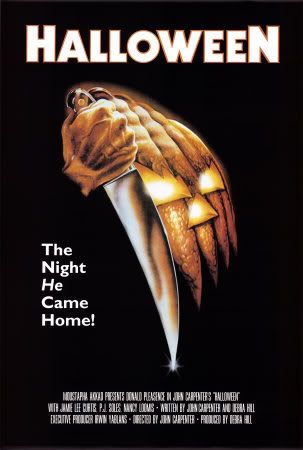
10) Let's get the obvious out of the way from the start. Halloween. In 1978, John Carpenters little film that could was unleashed on the unwitting suburban masses. Inspired by a combination of Hitchcock films and Italian giallo's from the 1960's, Carpenter takes every bit of slow build suspense he can and stuffs it into the suburban setting. The titular Michael Myers became a part of the cultural vernacular, a film franchise was spawned, and it scared the hell out of teenagers everywhere. If you've never seen Halloween, you're missing out. I'm betting that you've probably not seen it because it has the reputation of being the beginning of the slasher genre. Here's what you don't know. Unlike the imitations that came afterward, this is a nearly bloodless film. Halloween doesn't rely on blood and guts to achieve it's aims. There's some great cinematography in this film, as well as the completely awesome, over the top Donald Pleasance  performance that's incredibly entertaining. Jamie Lee Curtis is introduced to movie going audiences as Laurie Strode, the character fans of the series that followed couldn't wait to get to see again. If you've never seen it before, it can really still throw the fright into people. 

9) I'd put this higher up on the list, but it's the only of the films that is in theaters now (opening nationwide this weekend). Paranormal Activity is a great scare. That's really all there is to it. If you were ever one of those kids who dared your friends or were dared by your friends to go running into the local house with the haunted history attached to it, Paranormal Activity feels very much like that. Except, you're an adult now, and you're just not used to being that damned scared anymore. It's pulse pounding, suspenseful and the film succeeds in making you basically do that to yourself because it shows you so little. I've been beating the drum for this movie for a few months now, and I'm not going to stop because it has gotten a nationwide release and it has already become incredibly successful for the $15,000 it cost to make. I've been beating the drum for this film, and have continued to because it is just that fun to watch. GO SEE THIS IN THE THEATERS NOW!!!! 


8) Halloween is a fun holiday, and it should involve some kind of imagination, that kind you used to have when you were a kid. That's why Phantasm makes the list. It's all about imagination. Don Coscarelli did a great job of putting something on film which is familiar enough to keep you going, but which has enough imagination that it really takes on a kind of dream like quality. It's not for everyone, for that reason. You're not dealing with a reality you understand, but it is a reality which does have all of it's own logic, and sticks to it. Coscarelli manages to really get the feel of that childlike imagination into the fabric of the film, and that's not a small thing for any film, much less one started, and completely in such a D.I.Y. kind of way. I also can't get away without mentioning the seventies vibe to the film. It makes for some good laughs now. Angus Scrimm puts in a great performance as The Tall Man, a character which has developed it's own cult following in the horror community and the festival circuit.


7) Speaking of fun, another ghoulishly good flick for the Halloween season is Night Of The Creeps. This one is finally coming to DVD and Blu-Ray on Oct. 27th. We've got an alien invasion film, a zombie film, bits of slasher film, and fifties B movie all wrapped up into one decidedly absurd package by one Fred Dekker. You might not be familiar with the name, but the chances are that if you're in your early to mid-thirties (or are just a film geek like me), you've heard of The Monster Squad, Dekker's other film from the 80's. Night Of The Creeps is a lot less kid friendly than The Monster Squad, if only for the level of gore thrown about. Take heart if you're a non-horror lover, most of the gore in this one is strictly for gags. It's both a send up of the B-movie monster flicks from the fifties, and a loving homage at the same time. It's got a little bit of everything and is generally well made enough, and doesn't take itself seriously enough for most people to enjoy it.


6) It's time to get a few genuinely scary flicks in, because after all, it is Halloween, and what better time of year to allow yourself to get the pants scared off of you from the comfort of your own living room. Hence, I give you The Shining.Aside from the obvious, the things people always say about The Shining being terrifying, Jack Nicholson being brilliant, Kubrick being one of the greatest film makers of all time, and the beauty of the location and cinematography, there's something else I absolutely love about it. When I talk to people who don't generally like horror films, it's invariably the exception they make. When you bring up The Shining, they'll say, "That was a great movie. It scared the crap out of me." In other words, it's one of the truly rare gateway films the horror community shares with the rest of the film community, The Silence Of The Lambs being the other big one.  There's never a bad reason to watch The Shining. This and the next film were the first two horror films I ever saw, and they scared the living daylights out of me. From that point forward I was hooked.


5) I've met a few people who have seen The Exorcist and claim it was not at all scary. Somehow, I don't believe them at all. If nothing in this film unsettles you or downright scares you, I'm going to throw in the suggestion that you may not be human or you may really need to go in and talk to someone about that. I saw this for the first time when I was ten or so years old. Some of you might be thinking that is way too young for a kid to see a film like this. Unfortunately for my parents, I'd picked up a voracious reading habit, and believe me, there are much more disturbing books in the world than this was a film. I was looking for them. 1984 probably frightened me more than this at that age, and probably still does. The point is, I can remember seeing both The Exorcist and The Shining and being scared to pieces as a kid, and never wanting them to end. This might be a strange twist of personality, but there seem to be a lot of us out there, so I'm not too worried. It was the very first blockbuster film, also incredibly controversial (the two were probably connected), and remains a must see for all up and coming horror fans. It also touches somewhat on some of those weird, strange superstitions that Halloween and many of it's traditions have come from. Namely, keeping evil spirits at bay. Maybe a Jack-o-lantern would have done Reagan some good, but somehow, I don't think so. Truly scary stuff. Kudos to Dick Smith for a make-up effects creation and William Friedkin for a film that a miscarriage, fainting, vomiting, and people leaving the theaters in tears have all been attributed to. Beyond all of that though, like The Shining, this is masterful film making. There are some actual adult, serious themes at work in the film, beyond just the creature effects and disturbing nature of the content. There are also adult performances (something missing from too many of the contemporary scare flicks). Every performance in this film is outstanding. Some of you might know that for a good while, I usurped the name Damian Karras as an nom de plum on the intrawebs. That was specifically a tribute to the character and the actor who played him because this film and the character are so perfectly crafted. As a side note, if you don't know much about Jason Miller, the actor who portrayed Karras, his is an interesting story in it's own right. He was a Pulitzer Prize winning playwright, among other things.

4) The classic. The one. The only. Night Of The Living Dead gripped audiences and changed the course of cinema history. That might sound a little hyperbolic. If you think so, consider this, Night Of The Living Dead was originally being shown as a Saturday matinee, basically for children, because that's when horror movies were being shown in 1968. If you haven't seen the film, I can tell you this much, the difference between the horror films which had been shown to kids in matinees then and what NOTLD was is the difference between Star Wars and Schindler's List. Both of those films are about saving people from oppressive regimes. One of them is light hearted, fantasy, the other is a grim, horrifying, and emotionally traumatic. Night Of The Living Dead got yanked from the matinee spot as soon as critics got their shot at it, as it should have. It then went on to become the first of the Midnight Movies, achieving cult status and establishing the idea that there was a population of people out there who specifically wanted to see films that were out of the mainstream. It's been placed in the Library of Congress National Film Registry as a film deemed "historically, culturally, or aesthetically important." This is serious horror. I also contend that without it, the independent film movement we all enjoy so much today either wouldn't exist or at the very least, wouldn't be something which could be accessed by people outside of the largest metropolitan areas. It's one of those rare films that changed everything. Here's the reason it makes the list of Halloween horror flicks: we're still celebrating Halloween. Horror films still make big, big money. We still get dressed up in costumes, put out jack-o-lanterns, give out candy and all of that stuff. Given the difference in what we know now scientifically, and where we are religiously (almost all of these customs date back to pre-Christianity), why the hell are we still doing these things? Night Of The Living Dead, the film and it's history are a better explanation for that than any sociology textbook could ever give. It's the tie between those ancient fears and our modern society and what they have in common. A bonafide masterpiece.

3) From the horrifyingly unsettling to the horrifyingly absurd. Dead Alive is one of Peter Jackson's (you know, that guy who made that trilogy for nerds and geeks called The Lord Of The Rings) early works. A.K.A Brain Dead, depending on where you live, this is often referred to, as the line on the poster says, as "the goriest fright film of all time". But, this is in no way a serious film. Dead Alive has more in common with The Three Stooges than it does Night Of The Living Dead. All of the gore in the film is meant to make you slap your forehead and exclaim "oh WHY?!", not make you wretch. It's fun stuff, and Brain Dead may have been a better name for the film because it is essentially brain dead. The only intent here is to make you laugh at how gloriously insane and gory this film actually is. Jackson uses some semblance of a plot about a monkey from Skull Island (oh yeah, he did that remake about the huge monkey as well) which is dragged back to New Zealand as a zoo attraction. Well, apparently anyone it bites becomes a flesh eating zombie. Our hero, on a clandestine date, finds his smothering mother has been following him when she's bitten by the ugliest simian you've ever seen. From there, things go downhill, and it's funny as hell. It's really fun stuff from a man who later proved himself to be a master film makers, and who horror fans are happy has shown he sure has a love for gore.

2) This film laid the groundwork for so many that followed, it's hard to leave it out of  any list of horror films. But, considering the general tone of the film, it fits here on a list of Halloween films. It's fun, kind of scary, kind of weird, experimental, and do it yourself, imaginative film making at it's best. Evil Dead 2 is as much Three Stooges as it is horror film, it's the #1 reason Bruce Campbell has become a cult hero, and it was the very first suggestion that Sam Raimi could possibly be a master film maker.  I saw this for the first time when I was probably fourteen or fifteen, and my reaction to it was, "I didn't know you could do that in a movie!" and not just in the sense of the incredible gore (because there's lots of it, again comedic in tone), but in the way the story is told and in the cinematography as well. There is a kind of kinetic quality to this film that is extremely rare. It just seems to be moving along at an incredible pace, that even when the on screen action slows down, it's either in service to the comedy or the suspenseful aspects of the film. This is just a great, fun, incredibly inventive film. 

1) There's a new king in town. As of this year, Halloween has a new favorite film for the season. Will I always love John Carpenter's Halloween? Yes. Will it always have a special place in my heart because it was one of my very first and longest lasting "favorite movies"? Absolutely. But, the thing about Trick 'r Treat is that it's an anthology, with every film being related to something that is directly related to so many of our different Halloween traditions. It's a lot of fun, extremely well made and the love for both this style of film and for the holiday itself are palpable in viewing the film. Like Paranormal Activity, this film made a big splash at the film festivals and got picked up by a larger studio, and sat on the shelf for two years. This didn't get released to theaters specifically because the studio was afraid to release it opposite any of the Saw films, which have ruled the Halloween box office for some six years now, possibly a seventh if this year continues the trend. I can't think of another film which is so specifically about Halloween, and which tells it's stories with such skill. In short, it gets the top spot for the combination of great content related to Halloween, and really good film making. Trick 'r Treat is the kind of film that needs more support and more attention from the masses. If you're of the mind that horror has become too focused on torture, degradation and lost it's eye for the fanciful and fantastic, this is perfect for you.